Excess Inventory Buyers in Atlanta: Selling Full-Case Stock Split Across Warehouses and 3PLs
Atlanta sellers with stock split across warehouses and 3PLs: LiquidationBuyout.com buys full-case excess inventory nationwide. How to submit a split lot as one review, the 3PL authorization question, and terms confirmed in the written agreement.

LiquidationBuyout.com buys excess inventory from businesses in Atlanta and across metro Atlanta, purchasing full-case branded-manufacturer goods — overstock, closeouts, discontinued lines, and canceled orders — directly from brands, manufacturers, distributors, retailers, and e-commerce sellers, including lots split between a seller's own warehouse and one or more 3PL sites. The company is based at 1305 Marquette Dr, Romeoville, IL 60446, has no Atlanta office or warehouse, and reviews a split lot as one submission built from a separate inventory list, photos, and pickup details for each address, with price, payment, and collection for each site confirmed in the written agreement. It does not buy customer returns, mixed pallets, shelf pulls, or salvage.
Ask an Atlanta seller where their excess stock is, and the honest answer is often plural. Some of it is in their own building. Some overflow went to a 3PL months ago and stayed. A discontinued line sits at a second site because that is where the space was. This guide is about that shape of lot: how to present stock split across sites as a single, reviewable submission, and what changes (and what does not) when the second address appears.
Why Atlanta lots so often sit at more than one address
The stock itself matches the patterns on this site: slow-moving stock, seasonal overstock, and canceled orders tie up cash and warehouse capacity wherever they sit. Sellers asking where to liquidate inventory usually discover the lot is split for logistics reasons, not intent:
- The overflow decision. The main warehouse filled, so full cases of a slow line moved to a 3PL or a second building — and never came back.
- The 3PL arrangement itself. Stock held by a third-party warehouse from the start: authorized warehouse inventory, and in some cases rejected shipments or unclaimed goods, once the right to sell them has been established.
- The e-commerce split. Removal stock and discontinued listings come back to wherever the seller's operation can receive them, which is not always where the rest of the line is stored.
- The multi-site business. A distributor or retailer with more than one Atlanta-area location holds part of the same closeout at each one, in unequal amounts.
None of these make the lot two lots. They make it one lot that has to be documented address by address — because a buyer prices collection from where the cases actually sit.
One lot, one conversation — at every address
The searches behind this market do not ask about addresses at all. Sellers type "excess inventory liquidation," "buy closeout inventory," "buy overstock inventory," "closeout buyers," and "surplus inventory buyers," and they mean the whole problem, not the portion of it in one building. LiquidationBuyout works the same way: one direct buyer reviewing the full picture. The excess inventory buyers in Atlanta page is where an Atlanta submission starts, and the national excess inventory buyers hub sets out the model behind it. Splitting the submission by building hides exactly what a reviewer needs to see: the total quantity of each product across all sites.
How to submit a split lot: one list per address
The fix is structure, not volume. Send one submission whose documentation is separated by site, so every case is counted once and located once:
- A separate inventory list for each address — product, quantities in full cases, condition and packaging, and dates or model numbers where they apply, stated per site rather than merged into one total nobody can verify.
- The pickup details for each site — pickup address and ZIP code, pallet count, and warehouse access details, per site, so logistics can be considered with the offer.
- Photos from each location, labels visible, taken where that portion of the stock stands. Photos from Building A say nothing about cases in Building B.
- One combined summary on top — total cases per product across all sites, your deadline if there is one, any restrictions, and a target price if you have one.
- The ownership line for each site — who owns the goods at that address and who is authorized to sell them (this matters most at a 3PL; see below).
The team evaluates the stock as submitted and may request more information before discussing an offer; acceptance depends on category, condition, quantity, resale potential, and restrictions. A merged spreadsheet with no addresses cannot be priced, because transportation — part of every offer's economics — is different at each dock. Sellers ready to sell excess inventory in full cases, or to buy surplus inventory positions off their books entirely, start from the same per-site documentation.
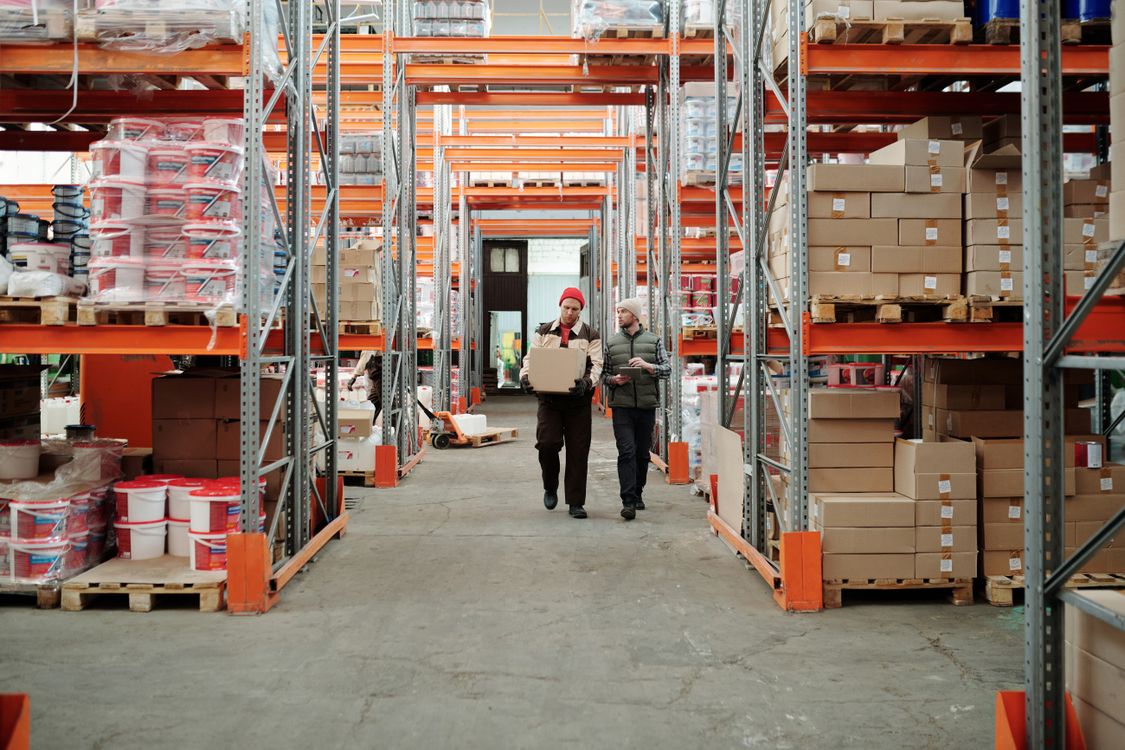
The authorization question: stock held at a 3PL
A split lot raises one question a single-building lot does not: at the address you do not operate, who can say yes? The rule on this site is plain — 3PL-held goods can be submitted if you are authorized to offer them for sale. Identify the owner and the seller, any release requirements, and any necessary approvals for each site where that applies. The 3PL inventory liquidation in Atlanta page covers that route specifically.
Settle authorization before the offer conversation, not during collection. A lot that prices well and then stalls on a release requirement costs both sides the timeline — and if the goods are not yours to sell, there is no lot at that address at all, whatever the other sites hold.
What a second address does not change
- There is still no universal minimum. Send the lot size you have at each site; suitability depends on the product and the overall economics, including transportation, and each opportunity is reviewed individually. A small remainder at a second site is a fact to state, not to hide or inflate.
- There is still no rate card. Inventory liquidation services do not price off a flat percentage of retail value, and splitting a lot does not create one. Value depends on resale demand, condition, quantities, dates, restrictions, and transportation — now counted per pickup instead of per lot.
- An offer is still not guaranteed. Not every submission receives an offer, split or single-site. Companies that buy excess inventory review documented stock; expect questions before numbers.
- Restrictions are still reviewed per the written agreement. If goods at one site carry channel, geographic, or brand restrictions the other site's do not, say so site by site, before an offer is agreed. Restrictions must be reviewed and included in the written agreement; they are not automatically guaranteed.
Full-case at every address — and the "warehouse" question
The exclusions apply at each site independently. LiquidationBuyout buys full-case goods directly from the businesses that own them, and it does not buy customer returns, mixed liquidation pallets, shelf pulls, or salvage — so a split lot where one address holds clean full cases and the other holds returns is, in practice, a full-case lot at one address and a decline at the other. State what sits where, honestly, in the first submission.
That distinction matters in Atlanta search results because some of this site's highest-ranking phrases, "liquidation warehouse" among them, describe the walk-in pallet trade: local warehouses selling mixed pallets to resellers. That is a real business, but it is not this one. The "near me" version gets the same plain answer: sellers searching for closeout buyers near me usually mean, will someone deal with my buildings, my docks, my counts? Yes — from the documentation, with a collection plan for each accepted site confirmed in the written agreement. What Atlanta sellers do not get is a local LiquidationBuyout warehouse to consolidate into: the Atlanta location page covers how the company serves the market from Romeoville, Illinois.
Frequently asked questions
Can I submit stock held at two different Atlanta-area addresses as one lot?
Yes — submit it as one lot with the documentation separated by site: an inventory list with quantities in full cases for each address, the pickup ZIP code, pallet count, and warehouse access details for each site, and photos taken at each location. The team reviews the combined picture and may request more information before discussing an offer.
My inventory is held at a 3PL in Atlanta. What authorization do I need?
You need to be authorized to offer the goods for sale. Identify the owner and the seller, any release requirements, and any necessary approvals in your submission. That applies to authorized warehouse inventory, rejected shipments, and unclaimed goods once the right to sell has been established.
Most of my lot is at one site and only a little is left at a second site. Is the small site a problem?
State it as it is. There is no universal minimum; suitability depends on the product and the overall economics, including transportation, and each opportunity is reviewed individually. Whether a small remainder moves with the main lot or on different terms is confirmed in the written agreement.
How much is my Atlanta excess inventory worth?
Value depends on resale demand, condition, quantities, dates, restrictions, and transportation from each pickup site; original retail value alone does not determine an offer. Provide a manifest per site and a target price if you have one. Any price, payment, and collection terms for an accepted lot are confirmed in the written agreement.
Can restrictions apply to the stock at one site but not the other?
Tell us your requirements site by site, before an offer is agreed. Channel, geographic, or brand restrictions must be reviewed and included in a written agreement — they are not automatically guaranteed, and they are not assumed to cover stock at another address unless the agreement says so.
Do you buy customer returns or liquidation pallets at any of my sites?
No. LiquidationBuyout buys full-case branded-manufacturer goods — overstock, closeouts, discontinued lines, and canceled orders — directly from the businesses that own them, at every address. It does not buy customer returns, mixed pallets, shelf pulls, or salvage, and it does not sell pallets to walk-in buyers. Sellers who phrase the search as "we buy closeouts" and sellers holding split stock are asking for the same full-case review.
Do you have an Atlanta warehouse I can deliver or consolidate stock to?
No. LiquidationBuyout.com is based at 1305 Marquette Dr, Romeoville, IL 60446 and serves Atlanta through its nationwide model: lots are reviewed from your per-site lists, photos, and pickup details, and collection for an accepted lot is confirmed in the written agreement.
Start with a map of your stock
If your excess inventory lives at more than one address, lead with the map: which products, in what full-case quantities, at which sites, under whose authorization, with what restrictions. Then submit your inventory for review as the single lot it is. Questions first: info@liquidationbuyout.com or (630) 440-0889 — LiquidationBuyout.com, 1305 Marquette Dr, Romeoville, IL 60446, buying excess inventory in Atlanta, across Georgia, and nationwide.